

Forensic Interview
When a report of child maltreatment or sexual assault of a minor occurs, protecting the child and ensuring their safety often begins with an initial forensic interview conducted by a trained professional at a Child Advocacy Center.
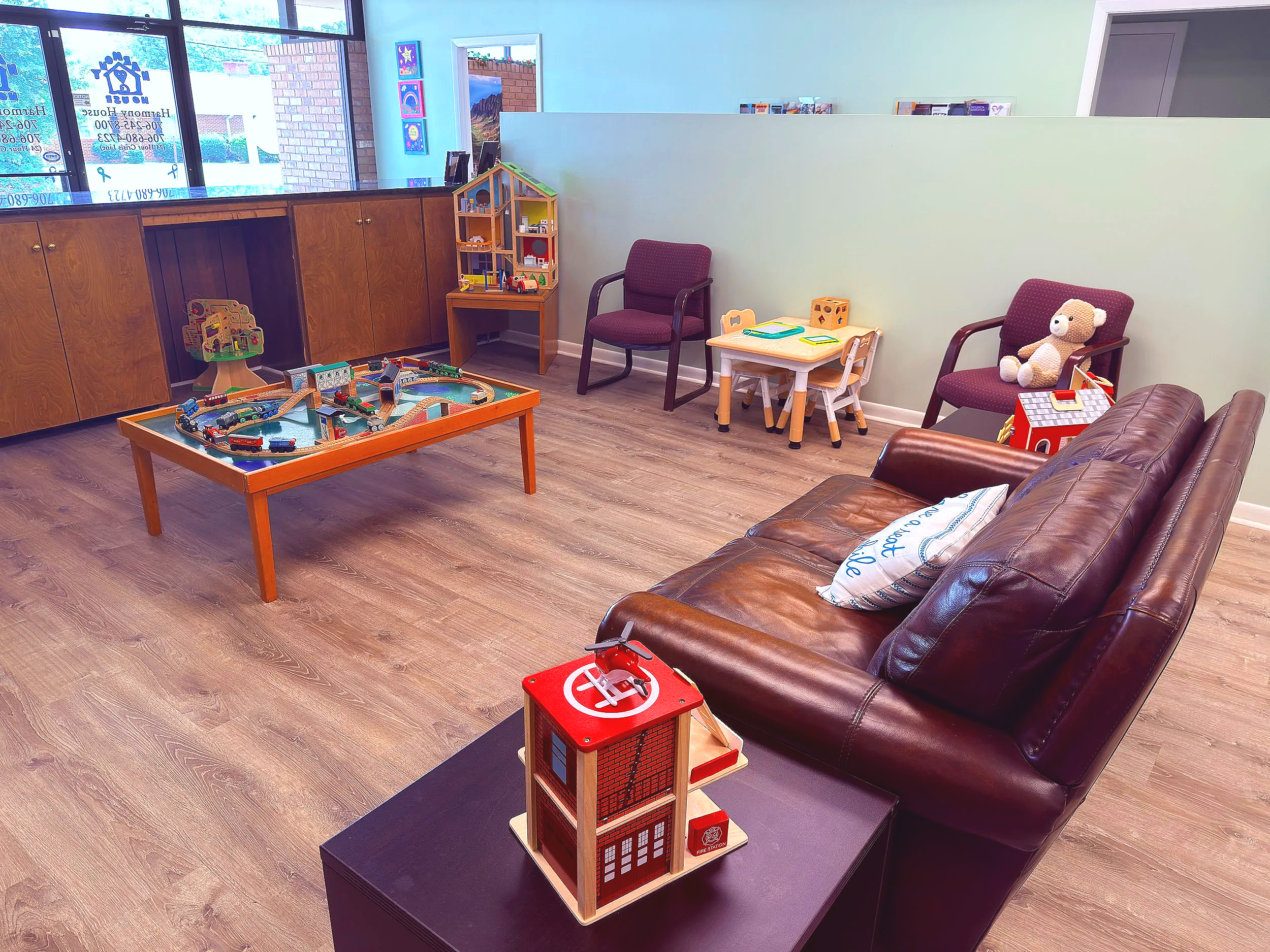
Lobby and Interview Room at
Our Royston Office

What is a forensic interview?
A forensic interview is a child-friendly conversation between a child and a specially trained interviewer. Representatives from Law Enforcement and Child Protective Services observe the forensic interview from another room. Harmony House Child Advocacy Center utilizes the ChildFirstTM Forensic Interview Protocol.
The primary objective of the forensic interview is to gather information to help Law Enforcement and Child Protective Services determine whether or not abuse has occurred in a legally sound manner.
During the forensic interview, the interviewer establishes rapport to help the child feel comfortable and uses non-leading, age-appropriate questions. This trauma-informed and research-based approach is designed to prioritize the safety and well-being of the child, while also reducing suggestibility.

A forensic interview is usually indicated when:
A child or teen (or adult with a developmental disability) is a reported victim or witness of physical abuse, sexual abuse, neglect, human trafficking, child sexual abuse material (CSAM), or a violent crime under investigation by Law Enforcement or Child Protective Services.
Interviews are generally conducted with children aged 3 through 17 years old. The process is also adapted to ensure accessibility for children and adults with intellectual or developmental disabilities.
What to Expect?
A Family Advocate will meet with the non-offending caregivers before the forensic interview to discuss informed consent and case dynamics.
A Forensic Interviewer will introduce themselves to the child and lead them to a child-friendly room where the interview will occur.
The non-offending caregivers will stay in the lobby with an advocate while the forensic interview occurs.
After the interview, the Family Advocate, Law Enforcement, and/or Child Protective Services will meet with the non-offending caregivers to discuss recommendations, next steps, and safety planning.